Training
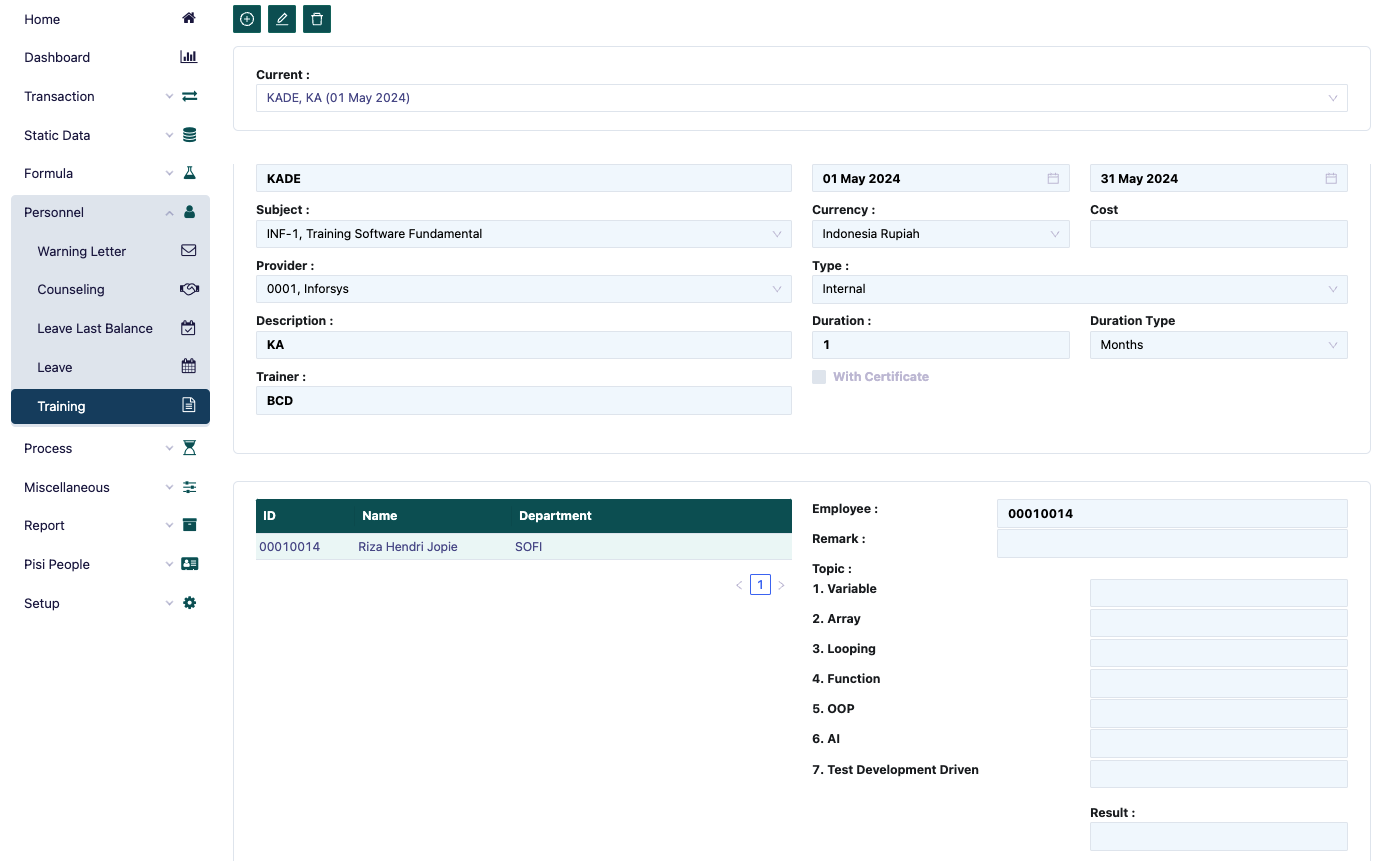
Company employee training or pelatihan karyawan perusahaan is a process designed to improve the skills, knowledge, and competencies of employees within an organization. The primary goal of training is to help employees develop professionally so they can perform their jobs more efficiently, stay updated with technological or regulatory changes, and contribute better to the company's objectives.
1. Purpose of Employee Training
Employee training is conducted to achieve several important goals, including:
- Improving employee performance: Training provides employees with new skills and knowledge, allowing them to work more effectively and efficiently.
- Increasing productivity: Trained employees are more productive because they understand their tasks better and can complete them more quickly.
- Adapting to new technologies: In the digital era, technologies and work systems constantly evolve. Training ensures that employees can keep up with relevant technological developments.
- Preparing employees for promotions: Training can prepare employees to take on higher roles or new responsibilities within the company.
- Reducing work errors: Trained employees tend to make fewer mistakes because they have a better understanding of their tasks and responsibilities.
- Enhancing employee motivation and retention: Training often makes employees feel valued and invested in by the company, which boosts motivation and lowers turnover rates.
2. Types of Employee Training
Employee training can take various forms and methods depending on the company's and employees' needs. Here are some common types of employee training:
Onboarding Training: This training is given to new employees to help them understand company policies, workplace culture, and their job roles. It’s an important first step to ensure new employees adapt well in the workplace.
Technical Skills Training: This type of training focuses on developing technical skills needed for specific jobs. For example, training on new software, tools, or specific technology systems.
Soft Skills Training: This training includes developing non-technical skills such as communication, leadership, time management, and teamwork. Interpersonal skills are critical for good work relationships and effective leadership.
Leadership Training: Targeted at employees projected to become future leaders or managers, this training includes team management, decision-making, and leadership strategies.
Compliance Training: This training ensures that employees comply with applicable rules, regulations, or company policies, such as workplace safety regulations, labor laws, and business ethics.
Career Development Training: This type of training helps employees develop their careers in the long term, such as training for promotions or learning new skills relevant to role changes.
Customer Service Training: This training helps employees working in customer service understand how to handle customers, resolve complaints, and deliver satisfactory service.
3. Employee Training Process
The employee training process typically involves several key steps:
- Identifying Training Needs: Companies must identify training needs based on employee shortcomings, technological or policy changes, and business goals. This is done through performance assessments, feedback, and training needs analysis.